

Start Online Notarization in Bethesda
Looking Glass Runners provides an online notary service to residents and businesses in Bethesda and across Maryland. Our remote online notarization platform connects you with a commissioned notary through a secure live video session so you can complete acknowledgments and jurats without leaving your home or office. Sessions are typically fast, with identity verification, a live signing, and a tamper-evident e-seal added to the document. Many recipients and institutions commonly accept e-notarized documents, though acceptance can vary, so we help you understand what works best for your document before you begin.
Using our online notary service means you can schedule outside normal business hours and avoid travel across Montgomery County. The process supports a range of common documents, from real estate and powers of attorney to affidavits and consent forms, with immediate download after notarization when permitted. We emphasize security through live video ID checks, multi-factor identity proofs, and an audit trail that records the session. If a document or recipient requires a wet-ink signature or in-person notarization, we will explain those limits and offer alternatives where available.
Compare Notary Options
Understanding Remote Online Notarization
What Remote Notarization Means
Key Elements of the Notarization Process
Benefits of Remote Online Notarization
Fast Online Sessions
Secure ID Checks and Digital Seals
When In-Person or Mobile Notarization Is Needed
When Originals or Wet-Ink Signatures Are Required
Certain documents, recipients, or jurisdictions require original wet-ink signatures or notarization in the physical presence of a notary. Examples include some court filings, certain property transactions, and documents requested by institutions that do not accept e-notarized copies. If your document or recipient falls into this category, a mobile notary who meets you in Bethesda or an in-office appointment may be necessary. We help identify these cases in advance and can refer mobile notary options to complete the wet-ink process when remote notarization is not appropriate.
When the Document or State Excludes Remote Notarization
Some documents are explicitly excluded from remote notarization by the receiving entity or by state law, including documents tied to specific statutory requirements or specialized filings. Additionally, not every state permits every type of online notarial act; rules vary and can change. If your document or its recipient requires a process that remote notarization cannot provide, we will explain those limitations and suggest alternative steps, such as scheduling an in-person or mobile session or preparing additional documentation to meet the recipient’s needs.
When Remote Notarization Is Preferred
Fast Sessions, Multiple Locations, and After-Hours Access
Remote notarization is ideal for busy schedules, cross-jurisdiction signers, or last-minute needs because it removes travel and allows flexibility. You can connect from home, work, or while traveling with a device that supports live video, and sessions often complete in a short time. Many people in Bethesda choose remote sessions when they need a quick acknowledgment or jurat outside typical business hours or when signers are in different locations. We offer guidance to make sure your document qualifies and to avoid surprises at the recipient’s end.
Immediate Download and Secure Audit Trail
One advantage of remote notarization is the ability to download the completed e-notarized document promptly when permitted and to retain the session’s audit trail. This can speed document delivery to banks, title companies, or other recipients and reduce the risk of lost paperwork. The audit trail and tamper-evident e-seal support authenticity and provide clear records of the notarial act. Because acceptance depends on the recipient and state rules, we always recommend confirming with the receiving party beforehand and provide documentation to support acceptance.
Practice Areas
Our Services
Top Searched Keywords
- Bethesda online notary
- remote notarization Maryland
- e-notary Bethesda
- online notary service Bethesda
- virtual notary Montgomery County
- notarize documents online Bethesda
- acknowledgment online notary
- jurat online notarization
- tamper-evident e-seal Maryland
Reasons to Use Remote Notarization
Remote notarization is a strong option when you value speed, convenience, and the ability to complete a notarization without travel. For residents of Bethesda and Maryland more broadly, it reduces the time spent coordinating in-person appointments and supports signers in different locations. The process often provides immediate access to a downloadable, e-notarized file and a recorded audit trail. Because acceptance can vary by recipient and state rules, we help determine whether your document and receiving party are compatible with remote notarization before you schedule the session.
Another reason to consider remote notarization is flexible scheduling, including after-hours availability that can accommodate nontraditional work times. This flexibility is helpful for busy professionals, families, or signers who cannot easily travel to a notary. Remote sessions use identity verification and secure platforms to maintain integrity, and the ability to download the notarized file right away can speed sending documents to banks, escrow companies, or other recipients. We provide clear instructions and support so you know what to expect and can complete the process with confidence.
Common Situations for Online Notarization
Typical circumstances that lead people to choose remote notarization include needing a quick acknowledgment or jurat, coordinating multiple signers in different places, last-minute notarizations outside regular business hours, and avoiding travel due to distance or mobility constraints. Remote sessions also work well for documents that recipients commonly accept when e-notarized, such as many powers of attorney, affidavits, and consent forms. Because some documents or recipients may require in-person notarization, we check eligibility and acceptance before your session so you can pick the best approach.
Real Estate and Title Coordination
Remote notarization can streamline real estate closings where permitted, helping sellers, buyers, and lenders complete acknowledgments without in-person meetings. Many title companies and lenders commonly accept e-notarized documents if state rules allow and if the recipient accepts the e-seal and audit trail. When remote notarization is not accepted, parties may need to use a mobile notary or in-person appointment. We work with you to clarify lender and title company requirements and arrange the appropriate type of notarization to avoid delays.
Healthcare and Power of Attorney Forms
Documents like medical powers of attorney, living wills, and healthcare directives are frequently notarized, and remote notarization can be helpful when signers cannot meet an in-person notary. Because acceptance policies differ among healthcare institutions and state rules, we confirm whether a recipient will accept an e-notarized form or whether a wet-ink signature is necessary. If remote notarization is appropriate, the process provides a convenient way to complete these important documents with identity verification and an audit trail for recordkeeping.
Affidavits and Corporate Documents
Affidavits, corporate authorization forms, and business documents are often suited to remote notarization, especially when signers are in separate locations or when a quick turnaround is needed. The recorded session and e-seal support a clear record of the notarial act, which many businesses and institutions find helpful. Acceptance still varies, so we advise you to confirm the recipient’s policy beforehand. When a recipient requires additional witnesses or wet-ink originals, we can recommend alternatives or schedule an in-person appointment as needed.
Remote Notary FAQs
What do I need to start a remote notarization?
To start a remote notarization, you will need a clear, final version of the document you want notarized and a current government-issued photo ID, such as a state driver’s license, state ID, or U.S. passport. You should also have a device with a camera and microphone, a stable internet connection, and a quiet, well-lit space for the live video session. We provide instructions on accepted identification and prepare you for potential credential checks so the session proceeds smoothly. Before your appointment, confirm whether the recipient accepts e-notarized documents and whether your document requires a specific notarial language or witnesses. If you have multiple signers, coordinate so each person has the necessary ID and device. We will guide you through the upload process and what to expect during the live session, including how the notary performs the acknowledgment or jurat and applies the tamper-evident e-seal when allowed.
Which documents can be notarized online?
Many common documents are eligible for remote notarization, including powers of attorney, affidavits, consent forms, and certain business documents, depending on state rules and the recipient’s policies. Real estate documents may be eligible in some states and for some lenders or title companies, but eligibility varies, so checking with the recipient first is important. Documents that require wet-ink signatures, special witnesses, or have statutory exclusions may not be suitable for remote sessions. If you are unsure whether your document qualifies, we can review it and advise on likely acceptance and any steps to improve acceptance with the receiving party. When remote notarization isn’t possible, we can suggest alternatives like a mobile notary or an in-person appointment and help coordinate the required process so your documents are processed correctly.
How do you verify my identity online?
Identity verification during a remote notarization typically involves presenting a current government-issued photo ID and allowing the notary or the platform’s credential analysis tools to examine the ID. Some sessions also use knowledge-based authentication questions or multi-factor checks to further confirm identity. The combination of visual ID review, electronic credential checks, and the live video session helps the notary meet the state’s standards for verifying the signer’s identity. We provide clear instructions on acceptable forms of ID and what to have ready before the session. If a particular platform or state requires additional verification steps, we’ll notify you in advance. The notary documents the verification steps in the audit trail, which supports the validity of the notarial act and can be provided to recipients when needed.
Is an e-notarized document legally valid?
E-notarized documents are commonly recognized when performed in compliance with state laws and the recipient’s acceptance policy. A valid remote notarization includes the notary’s actions documented in an audit trail, identity verification, and the application of a tamper-evident e-seal when permitted. Many institutions such as banks, title companies, and government agencies commonly accept e-notarized documents, but acceptance is not universal and can vary by recipient and jurisdiction. Because acceptance can differ, we advise confirming with the receiving party before you begin the remote notarization. If a recipient requires a wet-ink signature or an in-person notarization, we will inform you and help arrange an alternative. Our role is to facilitate a compliant remote session when it is an appropriate option for your document and recipient.
Can multiple signers join from different locations?
Yes, multiple signers can often participate in a single remote notarization session from different locations, provided the platform and state rules allow it. Each signer must present acceptable identification and be present on the live video call for the notary to verify identity and witness signatures as required for the notarial act. Coordinating signers in advance and ensuring everyone has the required IDs and a suitable device helps the session run smoothly. If multiple signers are involved, we will review the document to ensure the notarial certificate is prepared correctly and that the platform supports multiple simultaneous participants. If the document or recipient requires specific sequencing, additional witnesses, or in-person presence, we will advise on the appropriate method to meet those requirements rather than using remote notarization.
What devices work for an online notary session?
Remote notary sessions generally work on modern smartphones, tablets, and computers that have a working camera, microphone, and stable internet connection. A browser or a specific app may be required depending on the platform we use, so we’ll confirm technical requirements when you schedule. Good lighting and a quiet environment are important so the notary can clearly see your ID and witness the signing without interruptions. If you are unsure whether your device meets the requirements, we provide a checklist and technical tips before your appointment. Testing your camera and microphone ahead of time and closing unneeded applications can prevent delays, and we’ll support you if any technical issues arise during the session so the notarization can proceed efficiently.
How long does a remote notary session take?
Most remote notary sessions complete quickly, often within 5 to 20 minutes depending on document length, number of signers, and any identity verification steps required. A straightforward acknowledgment or jurat for a single signer frequently finishes near the lower end of that range. Complex documents, multiple signers, or additional verification requirements can extend the session time, but we strive for efficient scheduling and clear pre-session instructions to minimize surprises. Preparation is the key to speed: having your final document, valid ID, and a stable internet connection ready will reduce the time needed. We provide guidance on what to prepare and can answer questions before the appointment so the live video session focuses on the notarial act rather than troubleshooting or document edits.
Will the recipient accept my e-notarized document?
Whether a recipient will accept your e-notarized document depends on the recipient’s policies and the applicable state regulations. Many recipients commonly accept e-notarized documents that include a tamper-evident e-seal and a documented audit trail, but some banks, courts, or agencies may require wet-ink originals or in-person notarization. We recommend contacting the receiving party beforehand to confirm acceptance and any format or certificate language they require. If the recipient does not accept remote notarization, we will explain alternative approaches such as arranging a mobile or in-person notary session to obtain a wet-ink signature. Our team can help you evaluate recipient requirements and choose the method that meets those needs while avoiding delays.
What happens if my document is not eligible?
If your document is not eligible for remote notarization due to state rules or recipient requirements, we will inform you and suggest practical alternatives. Those alternatives may include arranging a mobile notary who can meet you in Bethesda, scheduling an in-person appointment, or preparing any additional documentation the recipient requires, such as witnesses or wet-ink originals. We aim to provide clear next steps so you can complete the notarization without unnecessary repetition. We also help by reviewing the recipient’s requested format and advising whether any changes to the document or certificate wording would improve acceptance. When remote notarization is not possible, we assist with coordinating the appropriate in-person process and explaining what to expect so the final notarization fulfills the recipient’s rules.
How do I get the notarized file after the session?
After the remote notarization session, you typically receive the notarized file for download immediately or shortly afterward when the platform and state rules permit. The file will include the notarial certificate and, when allowed, a tamper-evident e-seal applied by the notary. We provide instructions for downloading and saving your e-notarized document and can help with delivering it to the receiving party electronically or by other agreed methods. If the recipient needs a particular file format or if additional documentation from the audit trail is requested, we can assist in providing the necessary records or guidance. Should any issue arise with downloading or file delivery, our support team will help resolve it so you have the notarized document ready for use.
Online Notary in Minutes
Upload your document, verify your ID, and meet a commissioned notary on live video. Download your notarized file right away.
Why Choose Looking Glass Runners
Fast, affordable, and flexible—built for modern life. We accept all file types and support both eSign and hand-signed scans.
Speed
Most notarizations complete in 5–15 minutes.
Availability
On‑demand, after‑hours, and weekends.
Affordability
Transparent pricing from $15 per stamp.
Nationwide
States recognize and accept out‑of‑state notarizations.
Security
Live video identity checks + tamper‑evident e‑seal.
Convenience
No travel or printing required—eSign supported.
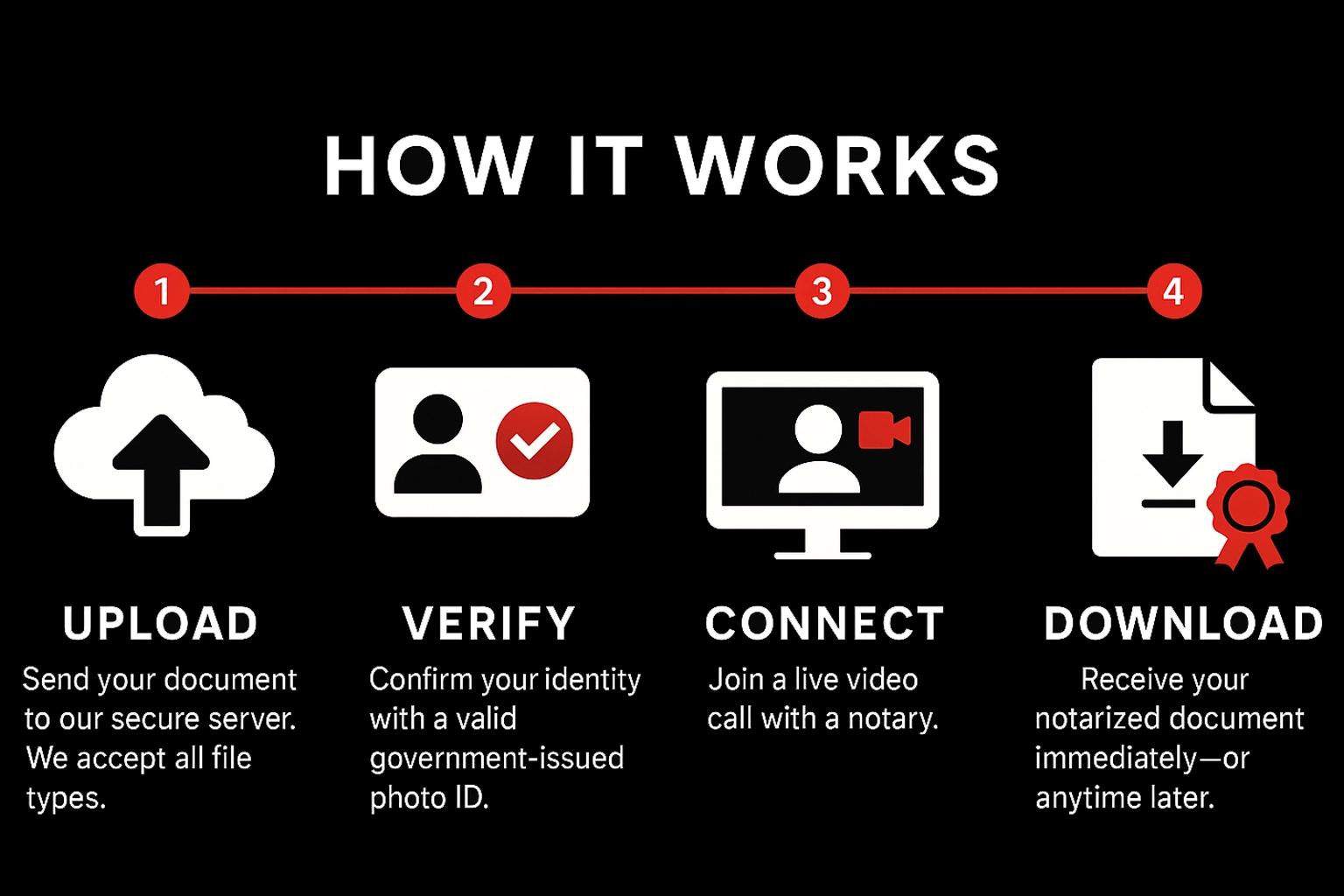
How It Works
Upload
Send your document to our secure server. We accept all file types.
Verify
Confirm your identity with a valid government‑issued photo ID.
Connect
Join a live video call with a notary.
Download
Receive your notarized document immediately—or anytime later.
Pricing & Payment
Standard
After‑Hours / Weekend
Payment
Pay during the meeting via Credit Card, Debit Card, Zelle, Cash App, or Venmo. Notarization completes after payment is received.
What You Need
Requirements
- Stable internet connection
- Device with camera, microphone, and sound
- Ability to appear on a live audio‑video call
Accepted IDs (examples)
- U.S. state‑issued driver’s license or photo ID
- U.S. passport (book or card)
- Certificate of U.S. Citizenship / Naturalization
- Foreign passport
- Alien Registration Card (with photo)
- Military ID
Not a complete list. Unsure? Email hello@lookingglassrunners.com.
Legality & Presence
Is online notarization legal?
Yes. In the U.S., states have laws that recognize and accept out‑of‑state notarizations.
Does the signer need to be present?
Yes. The signer must appear live on video so the notary can verify identity, confirm willingness, and ensure understanding.
When to Sign & Signature Options
Acknowledgment
You may sign beforehand. The notary verifies your identity and that you acknowledged signing willingly.
Jurat
Sign during the session. The notary witnesses your signature and administers an oath/affirmation.
Electronic vs Physical Signature
Electronic (eSign): Upload unsigned docs, sign during the call, receive an e‑notarized file by email.
Physical (Scanned): Sign by hand on the call, then upload for final notarization.
Ready to notarize?
Have your document signed and notarized within minutes. Getting a document notarized has never been easier.