

ONLINE NOTARIZATIONS ARE LEGAL AND ACCEPTED IN ALL 50 STATES

By appointment only. Login to schedule an appointment

Notary Public Near Me in Pennington

Notarize Documents Online in Pennington

Looking Glass Runners provides an Online Notary Service that lets Pennington residents complete remote online notarization quickly from any location with a camera and internet. Our platform connects you with a commissioned notary on live video so you can verify identity, sign or acknowledge documents, and receive an e-notarized file you can download immediately. This approach is designed for convenience, speed, and security, with sessions often completed within minutes and availability outside typical business hours. While many organizations and most states accept remote notarial acts, acceptance can vary by the receiving party and the type of document, so check requirements before starting your session.

Remote online notarization works for many common documents including acknowledgments, jurats, affidavits, and some real estate forms when allowed by state rule and the recipient. An acknowledgment confirms the signer signed willingly, while a jurat records an oath or affirmation given in the notary’s presence and usually requires signing during the session. We distinguish eSign workflows from hand-signed scans: e-signatures completed in the platform plus a tamper-evident e-seal are different from a scanned handwritten signature attached after the fact. If a receiving party requires a wet-ink original or has state-specific rules, we will note that before you begin your session.

Compare Notary Options

Choosing between in-person, mobile, and remote online notarization depends on document type, recipient expectations, and your schedule. In-person or mobile notarization is often chosen for wet-ink originals or when a recipient explicitly requires a hand-signed, in-person act. Remote notarization excels for fast completion, multiple-location signer needs, and after-hours access when the receiving party accepts e-notarized files. Our service helps you identify which route fits your situation by flagging documents that may require a different approach and explaining the benefits and limits of each method so you can decide with confidence.

Understanding Remote Online Notarization

Remote online notarization is a digital process where a commissioned notary witnesses and performs a notarial act over live video instead of in person. This includes verifying the signer’s identity with accepted credentials, observing signature or oath, and attaching an electronic notarial certificate with a tamper-evident e-seal. The full session is logged with a time-stamped record, and you can download an e-notarized copy immediately. For Pennington users, this means fewer trips and faster completion while keeping an official notarial record. Laws and recipient acceptance vary by state and organization, so we provide clear eligibility notes for each document type.
Not every document or recipient accepts remote notarization, and some documents still require original wet-ink signatures or in-person notarization under state or institutional rules. Examples include certain court filings and some powers of attorney in specific jurisdictions. Before you begin, our service will flag documents that may be excluded and suggest alternatives when needed. Many lenders, title companies, and other organizations commonly accept remote notarizations, but acceptance is decided by the receiving party. We recommend confirming with the recipient if you are unsure whether an e-notarized file will meet their rules.

What Remote Notarization Means

Remote notarization uses live video to connect a signer with a commissioned notary who witnesses the signing or administers an oath. The signer presents ID on camera and follows the notary’s instructions while the document is visible or electronically managed. When the notarial act is complete, the notary applies a digital notarial statement and tamper-evident e-seal, and the platform records the session for the audit trail. This process is designed to match the core protections of an in-person notarization while offering convenience. Laws and practices vary, so review the recipient’s requirements and state rules before relying on a particular notarized file.

Key Elements of a RON Session

Benefits of Online Notarization

Online notarization offers convenience, faster turnaround, and broader access without compromising key safeguards. You avoid travel and can schedule sessions outside normal hours, often complete a session in minutes, and receive an e-notarized file immediately. The process includes live identity verification and creates a recorded audit trail so recipients can verify the transaction. For Pennington residents, this means local convenience with statewide access through our Online Notary Service. While many recipients accept remote notarizations commonly, acceptance can vary, so it’s wise to confirm with the receiving party when in doubt.
A digital workflow reduces paper handling and lets multiple signers in different places participate without meeting physically, which is helpful for families, real estate closings, and business transactions. Security features like live video checks, credential verification, and the tamper-evident e-seal strengthen confidence in the notarized file. Immediate downloads let you send documents to recipients or upload them to portals right away. If a particular recipient or state rule requires an original paper signature, our platform will identify that need before you begin and recommend alternatives.

Quick Sessions in Minutes

Secure ID Checks and E-Seals

Security is central to remote notarization. The process pairs live video identity verification with accepted government IDs, sometimes supplemented by credential analysis or knowledge-based checks, and the session is recorded to create an audit trail. After the notarial act, a tamper-evident e-seal is attached to the document so changes are detectable. These layers are designed to replicate the protections of an in-person notarization in a digital setting. Keep in mind that specific verification steps and accepted ID types can vary by state, and recipients may apply their own checks when reviewing a document.

When In-Person Notarization Is Needed

Wet Ink or Original Documents

Some circumstances require a physical, wet-ink original signature and an in-person notarial act. Examples include certain court filings, estate documents in specific jurisdictions, or organizations that explicitly request an original paper document. When a wet-ink original is required, a mobile notary or an in-person appointment is the correct choice because remote sessions create an electronic record and e-seal rather than a paper stamp. Our platform will alert you if the document type commonly requires wet ink so you can choose the appropriate in-person option instead of a remote session.

Document or State Exclusions

Some documents and some states may not permit remote notarization for certain notarial acts or specific document categories. Examples can include certain powers of attorney, particular probate filings, or other documents that a jurisdiction or receiving entity excludes from RON. Acceptance also depends on the receiving organization’s policies. Because these rules vary, our service checks document eligibility and informs you if a selected document may not be suitable for remote notarization, and we suggest steps to obtain an acceptable notarization when remote processing is not allowed.

When Online Notarization Is Preferred

Fast, Multi-Location, After-Hours Access

Remote notarization is often chosen for speed and flexibility when signers are in different places or need appointments outside regular business hours. Sessions can commonly be completed in a short live video meeting, often between five and fifteen minutes depending on document length and verification steps. For busy Pennington residents, remote sessions remove travel time and let you notarize documents from home or on the go. You schedule around your day and often receive the completed e-notarized file immediately, which helps close transactions or meet deadlines without a physical visit to a notary office.

Immediate Download and Audit Trail

One key advantage of online notarization is that, once the notarial act is complete, the platform typically makes an e-notarized document available for immediate download and provides a recorded session and audit trail. This combination gives you a usable digital file right away and a verifiable record that documents the identity checks, time stamp, and the notary’s act. The audit trail supports future verification by a receiver and helps demonstrate the integrity of the process. Still, recipients vary in their verification methods, so confirm their preferences up front when possible.

online notary service

Practice Areas

Top Searched Keywords

Why Use Our Online Notary Service

Choose remote notarization when you need convenience, quick turnaround, and a secure digital record. Our platform helps Pennington residents and statewide users avoid travel while maintaining identity checks, a recorded session, and a tamper-evident e-seal for document integrity. You can connect with a commissioned notary on live video, complete the notarial act, and download the e-notarized file right away. If a recipient has special requirements, the platform will flag document limits and guide you on alternatives so you can select the right approach for your situation.

Remote notarization is especially helpful when signers are in different locations, need after-hours access, or want a faster process for routine transactions. The system reduces paper handling and provides an audit trail and recorded session for verification. Because laws and acceptance vary by state and by recipient, we recommend checking the receiving party’s requirements in advance. Where remote notarization is accepted, this approach commonly reduces time and logistical friction while preserving important security measures and a clear official record of the notarial act.

When People Use Remote Notarization

Remote notary services are commonly used for real estate paperwork when allowed, loan documents, affidavits, powers of attorney in jurisdictions that permit RON, and corporate authorizations where signers are scattered. People also use online notarization for estate paperwork, school or employer forms, and documents needed quickly for deadlines or travel. For many Pennington residents, the convenience of avoiding travel and getting an immediate digital file makes remote notarization the preferred option when the receiving party accepts electronic notarization and state rules allow it.

Real Estate Documents

When state rules and the receiving title company allow it, remote notarization can streamline real estate signings, remote closings, and transfer documents where multiple parties need to participate from different locations. The live video session lets the commissioned notary verify identities and complete required acknowledgments or jurats, and the e-notarized file is ready for immediate distribution to lenders or title agents. Always confirm the title company or closing agent accepts remote notarizations before proceeding to avoid last-minute rework or a requirement for a wet-ink original.

Powers of Attorney and Affidavits

Affidavits and powers of attorney are frequent uses for remote notarization in jurisdictions that permit such acts online. Affidavits often require jurats where the signer swears to the statement, while powers of attorney may require specific witnessing or state-specific formalities. Our service will indicate when these documents are generally suitable for a remote session or when they commonly require an in-person notary or additional witnesses. If a receiving party has special formatting or language requirements, check that they are met before scheduling your session.

Estate and Personal Document Signing

Estate planning documents, beneficiary forms, and personal declarations are sometimes handled with remote notarization where state rules allow. Because such documents can carry significant consequences, recipients like courts or financial institutions may have precise requirements about form and notarization type. Our platform helps identify when a remote session is appropriate and when an in-person act or wet-ink original might be needed. When accepted, remote notarization offers a secure, efficient way to complete these personal documents without a trip to a notary office.

Frequently Asked Questions

Is online notarization legal?

Remote notarization is legal in many states and is commonly used for a wide range of documents, but laws and adoption vary by jurisdiction. Some states have established permanent rules for remote notarization, while others may allow it under temporary or limited conditions. Because state rules change and acceptance can depend on the receiving party, it is important to confirm both state authorization and the recipient’s policies before relying on a remote notarization for a critical transaction. Our platform will notify you if the document you upload or the chosen notarial act is likely excluded under current rules or recipient preferences. This helps you choose an in-person or mobile notary when a wet-ink original or other formality is required.

A typical remote notarization session can be quite fast, often completing within a short live video meeting once your identity is verified and the document is ready. Many straightforward acknowledgments and jurats finish in about five to fifteen minutes, though longer documents or multi-signer sessions will take more time. Connection quality, ID verification steps, and the need for additional checks can affect the total session time. To keep the session efficient, prepare your ID, ensure a stable internet connection, and have the document organized before you begin. If multiple signers join from different locations, coordinate start times to avoid delays.

To start, you need a device with a working camera and microphone, a stable internet connection, and an accepted form of government ID such as a state driver’s license, state ID card, or U.S. passport. Some identity checks may use credential analysis or knowledge-based questions, so be ready to provide accurate information and answer verification prompts. Also ensure the document is complete and that you know whether a jurat requires you to sign in the notary’s presence. If you plan to use an electronic signature inside the platform, confirm the recipient accepts e-signed and e-notarized files. Our service provides guidance on accepted ID types and document eligibility before you schedule your session.

Out-of-state notarizations performed by a commissioned notary on a remote platform are commonly recognized across many jurisdictions, but acceptance depends on state law and the receiving entity’s policies. Some states accept remote notarizations performed by a notary commissioned in another state under specific rules, while other recipients may require a notary commissioned within a particular jurisdiction. Because practices differ, you should confirm with the recipient whether they accept a remote notarization from your notary’s jurisdiction. When in doubt, we recommend asking the receiving party if they accept remote e-notarized documents and noting any special requirements before scheduling your session to avoid issues with acceptance.

Certain documents are commonly excluded from remote notarization depending on state law or recipient policy. Examples may include some court filings, specific types of powers of attorney, or other documents that by statute or institutional rule require an in-person or wet-ink notarization. Acceptance varies, so our platform flags documents that may not be eligible for remote processing and provides options when a different approach is needed. If your document is flagged, consider contacting the receiving party to clarify requirements or arranging an in-person or mobile notary. This step helps ensure the notarized document will meet acceptance criteria for its intended use.

Remote notarization includes security measures such as live video ID verification, recorded sessions, and a tamper-evident e-seal attached to the electronic document. These features create an audit trail and protect against unauthorized changes after notarization. Many receiving parties accept these protections as comparable to in-person notarization, but some may apply additional verification steps or have unique acceptance rules. Because technology and state requirements vary, our platform follows current practices for identity verification and e-seals and records sessions to support later verification. We recommend confirming the recipient’s verification preferences in advance for complete certainty.

An acknowledgment is a notarial act confirming that the signer signed the document voluntarily, without requiring an oath or affirmation. The notary verifies the signer’s identity and states on the certificate that the signing was voluntary. A jurat, by contrast, requires the signer to swear or affirm that the statements in the document are true; the signer must take the oath and sign in the notary’s presence. Jurats are common for affidavits and sworn statements. In remote sessions, both acknowledgments and jurats can be completed over live video where state rules allow. For jurats, do not sign the document before the session if the jurisdiction requires signing in the notary’s presence, and be prepared to give the oath on camera.

Whether you can e-sign before notarization depends on the notarial act and recipient requirements. For some acknowledgments, a signature may already be present before the session, while jurats typically require signing in the notary’s presence during the live video session. If you plan to use the platform’s electronic signature workflow, confirm that the recipient accepts e-signatures paired with an e-notarization and follow the platform’s guidance for placing signatures during the session. Our service explains when a signature must occur in view of the notary and when pre-signed documents are acceptable. Following those instructions helps ensure the notarial act is valid and that the receiving party will accept the document.

After the notary completes the remote session, the platform will typically generate an e-notarized file that you can download immediately. The file includes the notarial certificate and tamper-evident e-seal, and the session recording and audit trail are stored according to platform practices. You can then save, print, or send the e-notarized document to the receiving party as needed. If you have multiple signers, each party will be able to access the final file according to the session settings. If you have trouble downloading or need additional copies, contact our support team and we can assist in retrieving the notarized file or explaining how to provide verification to a recipient.

Pricing for remote notarization is typically displayed transparently before you begin a session, with per-stamp or per-signature fees and any platform charges shown so you know the total cost up front. Some documents or multi-signer sessions may have different pricing, and optional services such as expedited appointments or certified copies could add fees. We strive to show clear totals before you confirm a session so there are no surprises at checkout. If you have questions about pricing for a specific document type or a complex signing with multiple participants, contact our support team or review the pricing information in the scheduling flow. We will outline any fees and payment steps before your session starts.

Nationwide • Online Notary

Online Notary in Minutes

Upload your document, verify your ID, and meet a commissioned notary on live video. Download your notarized file right away.

5–15 min
Typical session time
$15–$20
Per stamp • see pricing
50 States
Out‑of‑state notarizations accepted

Why Choose Looking Glass Runners

Fast, affordable, and flexible—built for modern life. We accept all file types and support both eSign and hand-signed scans.

Speed

Most notarizations complete in 5–15 minutes.

Availability

On‑demand, after‑hours, and weekends.

Affordability

Transparent pricing from $15 per stamp.

Nationwide

States recognize and accept out‑of‑state notarizations.

Security

Live video identity checks + tamper‑evident e‑seal.

Convenience

No travel or printing required—eSign supported.

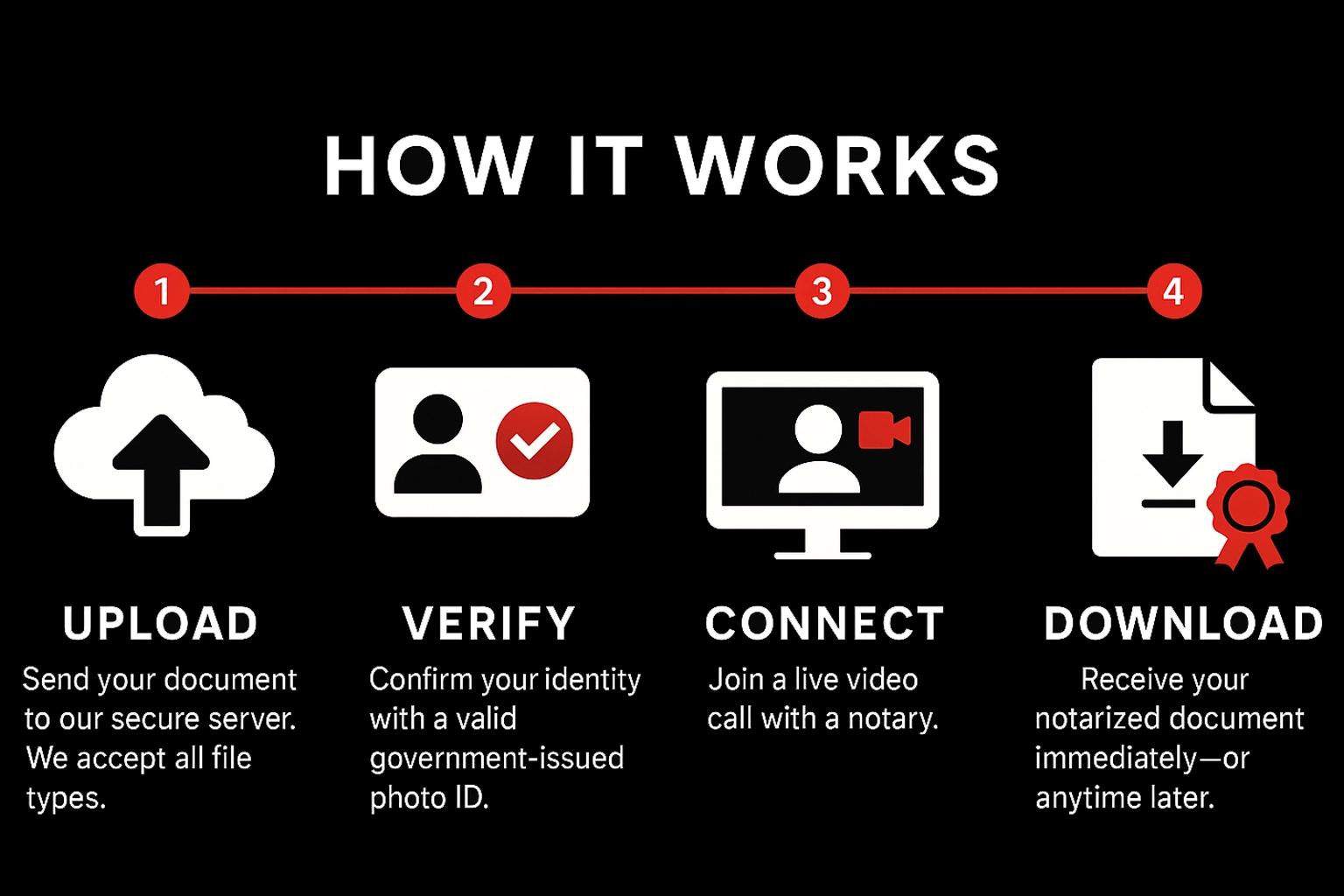
How It Works

Upload

Send your document to our secure server. We accept all file types.

Verify

Confirm your identity with a valid government‑issued photo ID.

Connect

Join a live video call with a notary.

Download

Receive your notarized document immediately—or anytime later.

Pricing & Payment

Standard

$15
Per stamp • Mon–Fri before 5:00 PM EST

After‑Hours / Weekend

$20
Per stamp • Weekdays after 5:00 PM EST & all day Sat/Sun

Payment

Pay during the meeting via Credit Card, Debit Card, Zelle, Cash App, or Venmo. Notarization completes after payment is received.

What You Need

Requirements

  • Stable internet connection
  • Device with camera, microphone, and sound
  • Ability to appear on a live audio‑video call

Accepted IDs (examples)

  • U.S. state‑issued driver’s license or photo ID
  • U.S. passport (book or card)
  • Certificate of U.S. Citizenship / Naturalization
  • Foreign passport
  • Alien Registration Card (with photo)
  • Military ID

Not a complete list. Unsure? Email hello@lookingglassrunners.com.

Ready to notarize?

Have your document signed and notarized within minutes. Getting a document notarized has never been easier.

Notarize now — fast, secure & nationwide Start

Notary Services in Pennington

Professional online and mobile notary services available 24/7