

ONLINE NOTARIZATIONS ARE LEGAL AND ACCEPTED IN ALL 50 STATES

By appointment only. Login to schedule an appointment

Online Notary in Beebe

Start Online Notarization in Beebe

Looking Glass Runners offers Online Notary Service access for residents of Beebe and others across Arkansas, giving you a fast and convenient way to get documents notarized over secure live video. Remote online notarization sessions use a commissioned notary who verifies identity with a live ID check, applies a tamper-evident e-seal, and provides an immediately downloadable notarized file. Many recipients in other states commonly accept out-of-state e-notarizations, though acceptance can vary by recipient or state rules. Use a smartphone, tablet, or computer with a camera and microphone to complete the session from anywhere with a stable internet connection.

This Online Notary Service is designed to save time and remove travel, with after-hours availability often available so you can notarize documents outside typical business times. Sessions typically include document upload, identity verification, a live video meeting with the commissioned notary, and instant access to the e-notarized file. Whether you need an acknowledgment, a jurat, or a simple verification of signature, we explain the difference during the session so you know what type of notarial act you’re requesting. Please note some document types and recipients may have specific requirements for acceptance of electronic notarizations.

Compare Notary Options

Choosing between in-person, mobile, and remote online notarization depends on document type, urgency, and convenience. In-person or mobile services are sometimes required for original wet-ink signatures or when a receiving party requests face-to-face notarization. Remote online notarization is commonly chosen for speed, convenience, and wide availability because it removes travel needs and often provides immediate download and audit trails. Always check with the receiving party about document acceptance and confirm whether the state or document type has any restrictions before selecting the remote option for important transactions.

Understanding Remote Online Notarization

Remote online notarization is a process where a commissioned notary witnesses signatures and applies an electronic notarial seal during a live video session. You start by uploading the document to the platform, then verify your identity with acceptable photo ID while on camera. The notary observes the signing on a live video feed, confirms your willingness and awareness, and applies an e-seal and digital signature or notation depending on the notarial act required. The completed electronic document is typically available for immediate download, and the session creates an audit trail with recording and time-stamped logs to support the transaction.
Remote online notarization differs from in-person notarization because identity verification and witnessing happen over secure video rather than face-to-face. The process often includes multi-factor identity checks and may use credential analysis or knowledge-based authentication alongside physical ID. While many states and organizations accept online-notarized documents, policies differ by state and receiving party. Some documents, like certain real estate transactions or court filings, may have special rules. We recommend confirming acceptance with the recipient before relying on an online notarization for critical transactions, and we can explain typical document eligibility during scheduling.

What Remote Online Notarization Means

Remote online notarization is the electronic equivalent of an in-person notarial act where a commissioned notary witnesses signing via live video and attaches a tamper-evident e-seal to the document. The key components are live visual and audio presence, identity verification using government ID and other checks, and a secure method for applying an electronic notarial certificate. The notarized file is often immediately downloadable and includes evidence of the process like timestamps and an audit trail. While many recipients and jurisdictions accept these e-notarizations, acceptance can vary, so it is wise to confirm with the receiving party for critical filings or out-of-state matters.

Key Steps in a Remote Notary Session

Benefits of Remote Online Notarization

Remote online notarization offers clear advantages: convenience of signing from anywhere, faster completion than scheduling in-person appointments, and strong identity verification using live video and government IDs. Many sessions include after-hours options, which helps people with busy schedules or in different time zones. The platform’s tamper-evident e-seal and audit trail provide added confidence, and the immediate availability of the notarized file reduces delays when you need to submit documents quickly. Acceptance by recipients varies, so check specific recipient policies when your transaction is time-sensitive or interstate.
Security and transparency are central to the remote notary process. The commissioned notary performs identity verification on a live, recorded session, and the resulting notarized file includes a traceable audit trail showing the date, time, and notarial act performed. This makes it easier to show the steps taken during notarization and helps reduce the risk of tampering. For many routine personal and business documents, remote online notarization reduces friction and speeds up workflows, while providing documentation that recipients can review for acceptance.

Fast Completion, Often in Minutes

Secure ID Checks and E-Seal

Security measures in remote notarization include live identity verification using government photo ID, possible multi-factor checks, and a recorded session that forms part of the audit trail. The commissioned notary applies a tamper-evident e-seal which, paired with digital signatures, helps recipients verify that the document was notarized properly and not altered afterward. While many recipients and most states commonly accept these measures, acceptance varies. If your recipient has specific requirements for notarization evidence, confirm ahead of time so you can meet their expectations and avoid delays.

When In-Person Notarization Is Needed

Wet-Ink or Originals Needed

Some transactions require original wet-ink signatures or notarization done in person, such as certain court filings, some real estate closings, or documents that expressly demand a physical signature and stamp. In these cases, a mobile notary who meets you at a location or an in-person office visit may be necessary to satisfy recipient requirements. If you have a document thought to need an original or are unsure, check with the receiving institution ahead of time. Our service can help clarify common scenarios and suggest whether a remote session is likely to be accepted.

Document or State Exclusions

Certain documents and state rules create exclusions for remote online notarization. Some states limit remote notarization to particular document types or have specific technology requirements, and some institutions may decline electronically notarized documents for their own reasons. Always verify the receiving party’s acceptance policy before scheduling a remote session, especially for interstate matters or high-value real estate transactions. We can help explain typical exclusions and provide guidance on preparing documents so you can choose the right notarization method for your needs.

When Remote Notarization Works Best

Fast, Remote, and After-Hours Availability

Remote online notarization shines when speed and flexibility matter: you can connect from another city or state, avoid travel, and often schedule sessions outside normal office hours. The live video process commonly completes in minutes once documents and ID are ready, making it a good fit for urgent signatures or when signers are in different locations. For Beebe residents and others across Arkansas, remote services remove the need to find a local notary during business hours, simplifying tasks like power of attorney updates, affidavits, and other routine documents.

Immediate Download and Audit Trail

One strong advantage of remote online notarization is immediate access to the finalized notarized file and a detailed audit trail documenting identity checks, timestamps, and session recording. After the commissioned notary applies the tamper-evident e-seal, you typically receive the notarized file for instant download, which helps speed subsequent filings or deliveries. The audit trail makes it easier to demonstrate the process used, which many recipients find helpful for recordkeeping. Still, always confirm with the receiving party that an electronic file meets their requirements.

online notary service

Practice Areas

Top Searched Keywords

Why Use Our Online Notary Service

Choose remote online notarization when convenience, speed, and documented security matter. Our service is designed for people in Beebe and across Arkansas who want to avoid travel, coordinate signers in different locations, or get paperwork completed quickly outside normal business hours. The process includes live identity verification, an audit trail, and a tamper-evident e-seal, with immediate access to the notarized file. Keep in mind that recipient acceptance and document eligibility vary, so confirm requirements for the receiving party when dealing with critical transactions or out-of-state matters.

Remote sessions reduce delays by consolidating upload, identity verification, and notarial acts into a single live video meeting. This approach often shortens turnaround time compared with scheduling in-person appointments and waiting for mail or scanning. It is well-suited for powers of attorney, affidavits, business authorizations, and other common documents. Always verify whether the receiving entity accepts electronic notarization and whether your document needs a jurat versus an acknowledgment, because those differences affect what the notary will record during the session.

Common Situations for Online Notarization

People use remote online notarization for a variety of everyday needs: signing powers of attorney when family members are in different locations, completing affidavits quickly for filing, notarizing real estate documents where the recipient accepts e-seals, and handling business authorizations without office visits. It’s also useful when travel is difficult or when after-hours scheduling is necessary. Because acceptance varies, it is wise to confirm the receiving party’s policy, especially for interstate matters or documents with special statutory requirements.

Powers of Attorney

Powers of attorney are commonly notarized remotely when signers and agents are in different locations or unable to meet during business hours. The notary verifies identity, ensures the signer understands the document at the time of signing, and attaches an appropriate notarial certificate indicating whether the act was an acknowledgment or jurat. Since acceptance rules vary, confirm that the entity or institution requesting the power of attorney will accept an online-notarized version before proceeding to avoid delays or additional notarizations.

Affidavits and Sworn Statements

Affidavits often require a jurat, where the signer swears to the truth of the statements while the commissioned notary observes. Remote online notarization supports jurats when the signer appears via live video and the notary administers the oath. This method speeds up filing and submission processes for many routine matters. Verify whether the court or recipient accepts remote jurats because some jurisdictions or institutions may have specific preferences or rules about electronically notarized sworn statements.

Real Estate and Closing Documents

Real estate documents may be eligible for remote online notarization in many cases, enabling signers to avoid in-person closings. However, requirements for real estate transactions differ by state and by the lender or recording office, so confirm acceptance ahead of time. When accepted, remote notarization provides convenient scheduling, secure identity verification, and immediate delivery of notarized documents, helping to keep closings on track. For interstate transactions or high-value sales, check the recipient’s policy and any state-specific rules before relying on a remote session.

Frequently Asked Questions About Online Notary

What do I need for an online notary session?

You need a device with a working camera and microphone, a stable internet connection, and a clear government-issued photo ID such as a state driver’s license, state ID card, or U.S. passport. Prepare the document in a commonly used format like PDF and ensure text is legible if you are uploading a scan. Close other programs that might interrupt the connection and choose a quiet, well-lit space for the live video session. These steps help the commissioned notary verify your identity and witness signing with minimal delays. Beyond the basic setup, confirm any recipient-specific requirements before the session so the notarized document will be accepted. If the document requires a jurat or specific language in the notarial certificate, mention it when scheduling. We can help identify common document types and recommend whether an acknowledgment or jurat is appropriate for your needs, but do check with the receiving party for any special acceptance rules or additional documentation they might request.

Remote online notarizations are commonly accepted across state lines by many recipients, and most states recognize out-of-state notarizations in standard contexts. The technology and audit trail associated with online notarization often meet the evidence needs of institutions and recorders. However, acceptance varies by the receiving entity and by state laws, so it is important to confirm acceptance with the recipient before relying on a remote notarization for critical transactions. If your document is intended for use in another state or for a specific institution, ask that party in advance whether they accept e-notarized files with a tamper-evident e-seal and recorded audit trail. For real estate, court filings, or agency submissions, some recipients have unique rules. If they do not accept remote notarizations, we can discuss alternatives such as an in-person or mobile notary where required.

A typical remote notary session often takes between five and twenty minutes once your document and ID are ready, though more complex documents or multiple signers can take longer. Time is used for identity verification, a live visual check of the signer and ID, the notary’s review of required notarial language, and attaching the electronic notarial certificate and e-seal. Preparing your ID and documents ahead of time helps keep the session brief and efficient. If multiple parties must sign or if the document requires additional review, plan for extra time. Scheduling an appointment during non-peak hours can also speed processing. After the session, the finalized notarized file is typically available for immediate download, which helps you complete subsequent steps without delay.

Commonly accepted IDs include U.S. passports, state driver’s licenses, and state-issued photo ID cards, provided they are current and unexpired. The commissioned notary will ask you to present the ID on camera so they can confirm details and match the photo to the signer’s appearance. Additional identity verification methods may be used, such as knowledge-based authentication or credential analysis, depending on state rules and platform capabilities. Because requirements vary, always have at least one primary government photo ID ready and check whether the receiving party or state imposes any extra identification rules. If you lack standard ID, contact us before scheduling so we can discuss available alternatives and ensure you can complete the session successfully.

Yes, many remote online notarization sessions accept wet-signed documents that have been signed by hand, then scanned or photographed and uploaded for notarization, provided the receiving party accepts this approach. The notary can review the scanned signatures during the live video session and apply the notarial certificate and e-seal electronically. Some recipients prefer native eSignatures created within the platform, while others accept scanned wet signatures, so verify the recipient’s preference beforehand. If the receiving party requires an original wet-ink document or a specific physical stamp, a remote notarization may not be sufficient. For critical filings or real estate transactions, check acceptance rules early to avoid needing a subsequent in-person notarization. When in doubt, contact the recipient to confirm whether they will accept a scanned wet-signed file notarized remotely.

An acknowledgment is when the signer confirms to the notary that they signed the document of their own free will; the notary verifies identity and completes an acknowledgment certificate. A jurat, on the other hand, involves the signer swearing or affirming that the contents of the document are true in the notary’s presence. Jurats typically require an oath or affirmation and are used for affidavits or sworn statements. During a remote session, the notary will perform the required act while observing the signer on live video and record the appropriate notarial wording. Choosing between an acknowledgment and a jurat depends on the document’s purpose and the receiving party’s requirements. If a jurat is needed, be prepared to swear or affirm the truth of the document’s contents. If you are unsure which act applies, ask the recipient or we can explain common distinctions when you schedule your session, but final acceptance criteria rest with the receiving party.

E-notarized documents are secured with identity verification methods, recorded session logs, timestamps, and a tamper-evident e-seal that helps show whether the file has been altered after notarization. The commissioned notary’s digital certificate and audit trail provide transparency about who signed, when, and how identity was checked. For many recipients, these features offer strong evidence that a proper notarial act occurred during a live session. While these safeguards are robust, acceptance of electronic notarizations varies by recipient and jurisdiction. If you have concerns about security or acceptance for a particular use, confirm the recipient’s requirements and ask whether they require any additional documentation. We can provide information about the audit trail and e-seal to help recipients verify the transaction.

Yes, multiple signers can participate in a remote online notarization from different locations as long as each signer appears on the live video with the commissioned notary and completes the identity verification steps. The platform supports coordinating signers in separate places and the notary will ensure each signer signs and is witnessed appropriately. Scheduling may require coordination to ensure all parties are available at the same time or sequential arrangements are agreed upon. If multiple parties are required to sign in a particular order or if different signers need different notarial acts, inform us in advance so we can prepare the session accordingly. Confirm any recipient requirements about how multiple signatures should be handled, because some institutions may have specific sequence or identification rules for multi-signer documents.

In most cases, the notarized file is available for immediate download after the commissioned notary completes the e-seal and notarial certificate. The platform typically provides a secure link or direct file access so you can retrieve the notarized document right away and send it to the recipient or file it as needed. Immediate access reduces processing delays and helps you finish other steps quickly. Keep in mind that some recipients may prefer a specific format or may request delivery directly from the notarization provider, so confirm the preferred method of submission ahead of time. If an institution requires additional certification or specific wording, let us know before the session so the notary can apply the appropriate notarial language and you can receive a file that meets the recipient’s expectations.

If a receiving party will not accept an e-notarized document, you may need to arrange an in-person or mobile notarization that meets their requirements. We recommend checking recipient acceptance before scheduling a remote session to avoid extra steps. If they refuse the e-notarized file, contacting the recipient to clarify their concerns often reveals whether a physical original or additional documentation will satisfy them. When a remote notarization is not accepted, we can discuss alternatives including in-person notarization or assisting you in obtaining any extra documentation the recipient needs. Planning ahead and confirming acceptance with the receiving entity reduces the chance of rework and helps ensure your documents are completed in the right format for their intended use.

Nationwide • Online Notary

Online Notary in Minutes

Upload your document, verify your ID, and meet a commissioned notary on live video. Download your notarized file right away.

5–15 min
Typical session time
$15–$20
Per stamp • see pricing
50 States
Out‑of‑state notarizations accepted

Why Choose Looking Glass Runners

Fast, affordable, and flexible—built for modern life. We accept all file types and support both eSign and hand-signed scans.

Speed

Most notarizations complete in 5–15 minutes.

Availability

On‑demand, after‑hours, and weekends.

Affordability

Transparent pricing from $15 per stamp.

Nationwide

States recognize and accept out‑of‑state notarizations.

Security

Live video identity checks + tamper‑evident e‑seal.

Convenience

No travel or printing required—eSign supported.

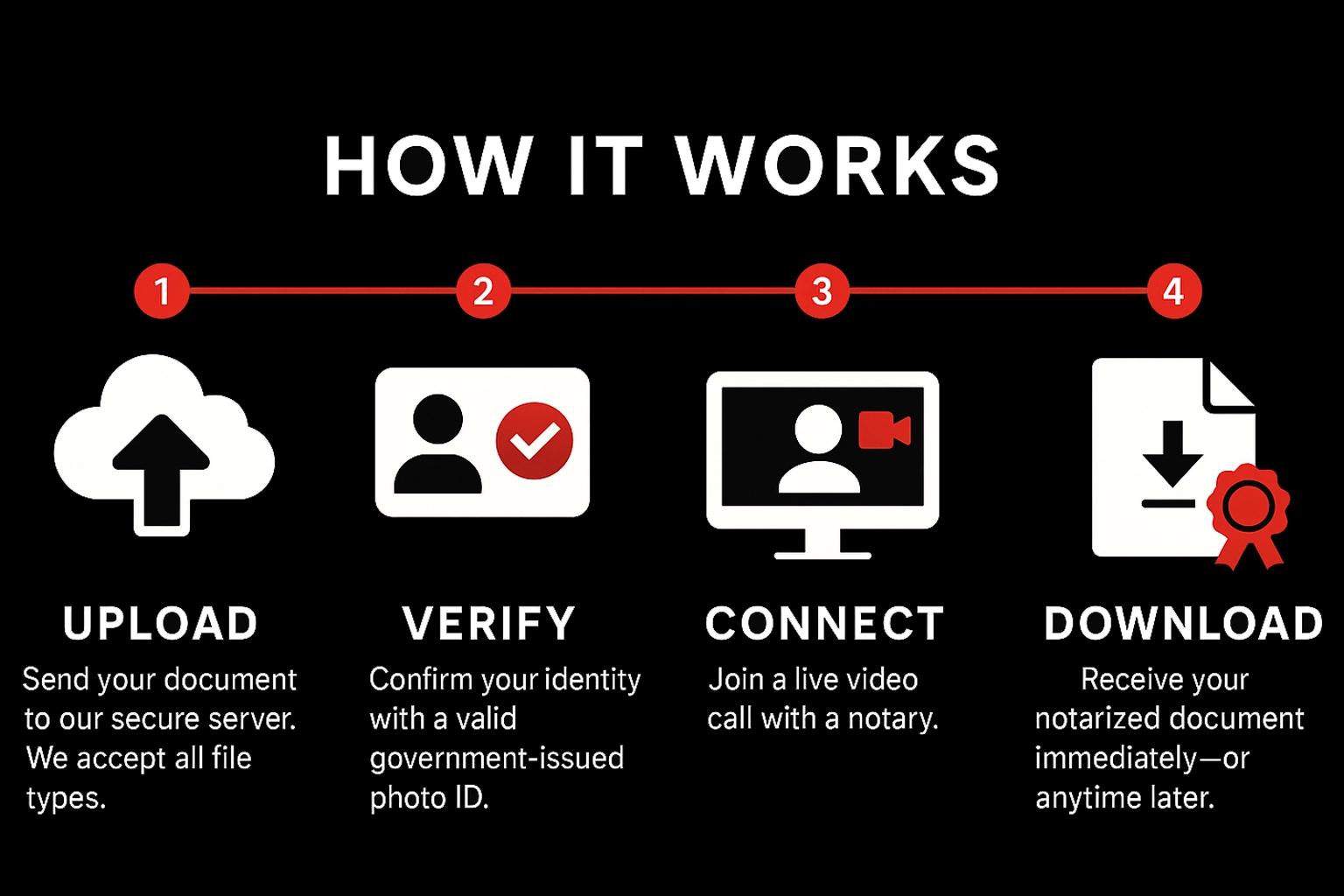
How It Works

Upload

Send your document to our secure server. We accept all file types.

Verify

Confirm your identity with a valid government‑issued photo ID.

Connect

Join a live video call with a notary.

Download

Receive your notarized document immediately—or anytime later.

Pricing & Payment

Standard

$15
Per stamp • Mon–Fri before 5:00 PM EST

After‑Hours / Weekend

$20
Per stamp • Weekdays after 5:00 PM EST & all day Sat/Sun

Payment

Pay during the meeting via Credit Card, Debit Card, Zelle, Cash App, or Venmo. Notarization completes after payment is received.

What You Need

Requirements

  • Stable internet connection
  • Device with camera, microphone, and sound
  • Ability to appear on a live audio‑video call

Accepted IDs (examples)

  • U.S. state‑issued driver’s license or photo ID
  • U.S. passport (book or card)
  • Certificate of U.S. Citizenship / Naturalization
  • Foreign passport
  • Alien Registration Card (with photo)
  • Military ID

Not a complete list. Unsure? Email hello@lookingglassrunners.com.

Ready to notarize?

Have your document signed and notarized within minutes. Getting a document notarized has never been easier.

Notarize now — fast, secure & nationwide Start