

ONLINE NOTARIZATIONS ARE LEGAL AND ACCEPTED IN ALL 50 STATES

By appointment only. Login to schedule an appointment

Online Notary in Virginia

Online Notary Guide for Virginia Residents

Welcome to Looking Glass Runners’ Online Notary Service for residents in Virginia. Remote online notarization lets you complete a notarized signing from home or any private location using a device with a camera and microphone. A commissioned notary will check your identity on live video, witness your signature, attach a tamper-evident e-seal, and provide an immediately downloadable notarized file. This option typically speeds up routine notarizations, reduces travel and scheduling hassles, and often works outside normal business hours. Acceptance of online notarizations can vary by recipient and state rules, so you may want to confirm with the receiving party before starting.

This guide explains how remote online notarization sessions work in Virginia, what you should bring, and which documents commonly qualify. Our platform supports a secure live video connection, an identity verification step using government ID and knowledge-based or credential checks, and an audit trail that records the session. While many lenders, title companies, and government agencies accept e-notarized documents, rules differ by state and by institution. If you have a unique document or are unsure about acceptance, it is best to check with the recipient. We serve Virginia residents statewide while highlighting service convenience for those in Virginia city locations.

Comparing Notary Options

Choosing between in-person, mobile, and remote online notarization depends on document needs, convenience, and recipient policies. In-person and mobile notarizations require physical presence but may be preferred for original documents that must remain in paper form. Remote notarization provides convenience for those who prefer not to travel, need after-hours availability, or require faster turnaround. Remote sessions include identity checks, a live video record, and an e-seal that supports many recipient needs, though some institutions or documents still require wet-ink originals. Confirm the receiving party’s rules to ensure the chosen method is acceptable before notarizing.

Understanding Remote Online Notarization

Remote online notarization (RON) is a process where a commissioned notary witnesses and notarizes your signature via live audio-video technology. During a session you upload the document, verify your identity with an acceptable ID, and sign while on camera. The notary confirms your willingness and competence, completes the notarial wording, and applies a digital notarial certificate and tamper-evident e-seal. The notarized document is then made available for immediate download. RON helps people who are remote, have mobility limits, or need faster service. Rules about which documents may be notarized online vary, so confirm acceptance with the entity that will receive the document.
A typical RON session produces an audit trail that documents who participated, how identity was confirmed, and when the notarial act occurred. This audit trail often includes session recordings, timestamps, and authentication logs that help establish the integrity of the notarial process. While many states and organizations accept this format, some documents or recipients may still prefer wet-ink signatures or in-person acknowledgment. The secure e-seal and the recorded session are designed to protect against tampering and to provide confidence to recipients. If a document must stay in original paper form for a specific recipient or legal filing, you should check before using online notarization.

What Remote Notarization Means

Remote notarization uses live video technology so a commissioned notary can identify a signer, witness the signing, and complete a notarial certificate without everyone being in the same physical room. The identity check can involve reviewing an acceptable government ID and additional verification steps such as knowledge-based authentication or credential analysis. After the notary completes the act, a tamper-evident e-seal and digital certificate are attached and the final file is delivered electronically. This process supports many common documents while offering speed and convenience, though acceptance and eligibility can vary by recipient and state rules, so verification ahead of time is recommended.

Key Elements of a RON Session

Benefits of Remote Online Notarization

Remote notarization simplifies the process by removing travel and scheduling barriers. You can complete a notarization from any private place with reliable internet, a camera, and a microphone. Sessions are often faster than traditional appointments, and many platforms support same-day or after-hours availability. The live video check and secure identity verification build confidence in the notarization, while the tamper-evident e-seal and audit trail help maintain document integrity. These features make remote notarization a practical option for individuals and businesses seeking speed and convenience in Virginia and beyond.
Beyond convenience, remote notarization can reduce logistical costs and help signers who cannot easily travel. The immediate download of a notarized document enables quicker submission to lenders, title companies, or other recipients. Secure identity checks and recorded sessions make the process transparent and auditable. Although many recipients accept e-notarized documents, rules vary, so it is important to verify acceptance for your particular use. Our service supports signers across Virginia with attention to security, clarity, and fast delivery so you can complete your notarial needs with minimal hassle.

Fast Sessions in Minutes

Secure Identity Checks and e-Seals

Security features in remote notarization include live camera identity verification, review of acceptable government ID, and a digital audit trail that logs the session. The commissioned notary attaches a tamper-evident e-seal and notarial certificate, and many platforms provide a recorded session to help recipients confirm authenticity. These protections reduce the risk of fraud and help recipients trust the document. Keep in mind that acceptance policies vary by state and by receiving entity, so while security is robust, it is important to confirm that a remote notary’s e-seal meets the recipient’s standards before proceeding.

When In-Person or Mobile Is Needed

Wet-Ink or Originals May Be Required

Some recipients insist on original paper documents with wet-ink signatures because their internal policies or statutory requirements specify an original physical document for filing or record-keeping. If a deed, will, or certain court filings explicitly require an original, an in-person or mobile notary who observes a wet-ink signing may be necessary. Remote notarization may not be acceptable in those limited circumstances. Before scheduling an online session, check with the recipient or the filing authority to confirm whether a paper original is required to prevent delays or rejection of the document.

Document or State Exclusions Apply

Not all documents are eligible for remote notarization, and not every state permits the same remote notarial acts. Certain transaction types or filings may be excluded by statute or policy. Acceptance of a remote notarization can also vary by the receiving institution even if your state allows remote notarizations. It’s important to verify both state rules and the receiving party’s requirements. If a document is excluded from RON or the recipient will not accept an e-notarized version, you should arrange for an in-person or mobile session instead.

When Remote Notarization Is Preferred

Fast, Remote Notarization Across Locations

Remote notarization is often the best choice when you need quick turnaround, are in a different city from the notary, or require flexibility outside normal business hours. Because sessions are completed over live video, signers who are traveling, working, or at home can connect with a commissioned notary without commuting. Appointments may be available in evenings or weekends, which helps people meet tight deadlines. Many clients find that an online session completes in a short time frame, reducing delays and making it easier to coordinate signings across multiple parties and locations.

Immediate Delivery and Verifiable Audit Trail

One strong benefit of remote notarization is receiving the notarized file immediately after the session, which allows you to send it to the recipient without waiting for mail or in-person pickup. The platform generates an audit trail with timestamps, identity verification details, and often a session recording that supports the document’s credibility. This electronic record helps recipients confirm the notarial act occurred as described. While this streamlines many transactions, recipients and filing authorities have varying policies, so confirm acceptance in advance when possible.

online notary service

Practice Areas

Top Searched Keywords

Why Consider Our Online Notary Service

Looking Glass Runners’ Online Notary Service offers speed, convenience, and secure identity verification for Virginia residents who prefer to avoid travel or tight scheduling constraints. Remote sessions eliminate the need to meet a notary in person while still providing a recorded audit trail and a tamper-evident e-seal attached by a commissioned notary. You can complete many routine notarizations quickly and download the final document immediately. Because acceptance and document eligibility vary by recipient and state, we guide clients through document preparation and recipient checks to reduce the chance of rejection.

Our platform supports signers across Virginia and emphasizes user-friendly scheduling, clear instructions, and after-hours availability when possible. Remote notarization accommodates busy schedules and remote signers, making it easier to meet deadlines for real estate closings, affidavits, powers of attorney, and other common documents. Security features like ID verification and an audit trail help build confidence in the final file. If a recipient requires a wet-ink original or if a document is excluded from online notarization, we will help you understand alternatives or recommend an in-person option.

Common Situations for Remote Notarization

People often use remote notarization when travel is difficult, schedules are tight, or signers are in different locations. It is also common for out-of-state residents with Virginia-related documents to use a remote session to avoid arranging a local in-person notary. Other frequent uses include notarizing documents for real estate transactions, powers of attorney, affidavits, and financial forms. Because requirements vary, confirm with the receiving party and prepare the necessary ID and document copies. Remote notarization can streamline these transactions while providing a verifiable audit trail and immediate delivery of the notarized file.

Real Estate and Closing Documents

Remote notarization is frequently used for real estate paperwork like closing disclosures, lender documents, and signatures that do not require an original wet-ink form. When accepted by the lender or title company, RON can speed up signings and allow all parties to complete their parts without meeting in one location. It is important to confirm with the title company, lender, or county recorder that they accept an e-notarized document and that the specific notarial act requested matches their needs. If a wet-ink original is required, plan for an in-person or mobile notarization instead.

Powers of Attorney and Financial Forms

Powers of attorney, bank authorizations, and many financial forms are often suitable for remote notarization when the recipient accepts an e-notarized copy. The notary witnesses the signing and verifies identity over live video, then applies the e-seal and certificate. Because these documents can have significant consequences, double-check recipient acceptance and required language before proceeding. If the document involves specific witness requirements or an original wet-ink signature, make arrangements for in-person notarization to satisfy those conditions.

Affidavits and Sworn Statements

Affidavits and sworn statements that require a jurat can often be completed via remote notarization if the receiving entity accepts an electronic jurat. The signer takes an oath or affirmation on live video while the notary verifies identity and observes the signing. The notary then attaches the jurat language and e-seal to the document. Because the jurat involves an oath, ensure the notarial wording is correct for your jurisdiction and recipient. If the accepting party requires a physical notary presence, an in-person session will be necessary.

Frequently Asked Questions About RON

What do I need to start an online notary session?

To start an online notary session you will need a device with a camera and microphone, a reliable internet connection, and an acceptable form of government-issued ID to show on camera. You should also have the document ready to upload in an accepted electronic file format, and any required supporting documents or witness arrangements prepared in advance. Our platform will guide you step-by-step through upload, identity verification, the live video signing, and the final download. Confirm the receiving party’s acceptance of remote notarization before beginning to avoid delays. It helps to use a quiet, well-lit space for the session and to close unrelated browser tabs or apps that could interfere with your connection. If witnesses are required, know whether they must be physically present with you or can join remotely under the platform’s rules. Preparing these items in advance reduces session time and ensures a smoother process from identity check to final delivery of the notarized file.

Commonly accepted forms of identification include a current state-issued driver’s license, state ID card, or U.S. passport. These IDs must be valid, legible, and free of significant damage that would obscure identifying information. Some platforms also support certain government-issued cards with a photo and may use secondary verification steps such as knowledge-based authentication or credential analysis for additional assurance. Because requirements can vary, review the platform’s list of acceptable IDs before your session to confirm you have the proper documentation available. If you are unsure whether your ID will be accepted, contact our support before the session so we can advise on alternatives. In some cases, supplemental verification like a second ID or additional identity checks may be requested. The notary will let you know during the identity verification step if any additional documents or checks are needed before proceeding with the notarial act.

A typical remote notary session often takes between five and fifteen minutes for straightforward documents, once you are prepared with your ID and the document is ready to upload. More complex signings, documents that require multiple signers, or additional identity verification steps can extend the session time. The platform includes steps for uploading the document, verifying identity, conducting the live video signing, and applying the e-seal, so the overall time depends on the number of parties and preparation level. To keep sessions short, review the document beforehand for any blank fields or unclear instructions, gather required IDs, and confirm witness arrangements if needed. If multiple signers are involved, coordinate appointments or ensure everyone can join the same session promptly. Advance preparation reduces the chance of interruptions and helps you receive the notarized file quickly at the end of the session.

Many banks, title companies, and other institutions accept remote notarizations, but acceptance varies by organization and by the specific document. Lenders and title companies commonly accept e-notarized files for many transactions, especially when the notarial act and the platform meet their verification standards. It is important to check with the receiving institution ahead of time to confirm they will accept a remote notarization for your particular document and whether they require any specific notarial wording or additional attestations. If a recipient has internal rules requiring wet-ink originals or excludes certain electronic notarial formats, you may need an in-person or mobile notary instead. Confirming recipient requirements before starting a session helps avoid rework and delays. Our team can help you verify common recipient preferences so you can choose the correct notarization method for your needs.

In many cases, you can use remote notarization to notarize documents for use across state lines, but the controlling rules depend on where the notary is commissioned and where the document will be used. Remote notarization laws differ by state, and some states accept out-of-state remote notarizations while others have restrictions. When a notary commissioned in one state performs a remote notarial act, the document’s acceptance by another state or a private recipient may depend on statutory recognition or the recipient’s policies. Always check the receiving party’s willingness to accept a notarization performed under the notary’s commissioning state, and confirm any interstate recognition rules that may apply. If the receiving party requires notarization by a notary commissioned in a particular jurisdiction, an alternative arrangement may be necessary. Our support can help you clarify likely acceptance for common scenarios.

Some documents are not eligible for remote notarization due to statutory exclusions or recipient policies. Examples can include certain court filings, wills in some jurisdictions, and other documents where the receiving authority specifically requires in-person presence or a wet-ink original. Because rules change and differ by state, the best practice is to verify eligibility with the receiving institution or filing authority before attempting a remote session. If a document is excluded, plan for an in-person notarization instead. If you expect a particular document to be eligible but are unsure, contact our team or the recipient for guidance. We can often advise on common acceptance patterns and suggest alternatives like in-person or mobile notarization when remote notarization is not appropriate for your document type.

Yes. Remote notarization platforms typically produce an audit trail that includes session timestamps, identity verification logs, and often a recorded video of the live session. The notary attaches a tamper-evident e-seal and a notarial certificate to the document, and the audit trail helps recipients verify that the signing and identity checks occurred as described. This layered record supports confidence in the notarized document and can be valuable when sending the document to banks, title companies, or other recipients who require assurance of the notarial process. While the audit trail provides strong evidence of the session, recipient acceptance still varies, so share any available verification details with the receiving party if requested. The recorded session and digital logs are typically available to help resolve questions about the notarial process, but access and disclosure should comply with privacy and platform policies.

You may sign electronically within the online notarization platform, or you may sign a paper copy and upload a scanned image if the platform and recipient accept that approach. Signing within the platform preserves the audit trail and makes it easier for the notary to confirm the signature was made in view of the live video. Many recipients prefer e-signatures completed within the system because of the clear linkage between the signing event and the notarial certificate and e-seal. If you choose to sign on paper and then upload a scan, confirm that the receiving party accepts scanned, hand-signed documents that were notarized remotely. Some institutions require original wet-ink signatures for certain filings. Check recipient rules in advance to ensure the chosen signing method will be accepted and avoid needing a second notarization.

If the recipient requires a wet-ink original, a remote notarization will not meet that requirement. In that case, you will need to arrange for an in-person or mobile notary who can witness a physical pen-and-ink signing and provide a wet-ink notarial certificate. Before deciding on remote notarization, confirm whether the receiving party demands a paper original or wet-ink signature to avoid rework. Planning ahead prevents delays or rejection when a physical original is mandatory. If you completed a remote notarization but later learn an original is required, contact the recipient and our support team to discuss next steps. We can help you arrange an in-person session or provide guidance about how to produce a wet-ink original if feasible under the recipient’s rules. Early verification is the best way to save time and avoid duplicate notarial processes.

Platforms used for remote notarization employ security measures to safeguard personal information, including encrypted connections, secure identity verification providers, and tamper-evident e-seals. Identity checks are performed on live video and may include reviewing government-issued ID and additional authentication steps. The platform also generates an audit trail that is stored securely to document the session. While these measures protect the session, it is important to use a private network and a secure device to reduce exposure of your personal data during the session. We follow privacy best practices and do not provide legal advice about data sharing. If you have concerns about specific privacy or data-retention policies, review the platform’s privacy statement or contact our support for details about how session data is handled and how long records are retained. Knowing these policies helps you decide how to proceed with confidence.

Nationwide • Online Notary

Online Notary in Minutes

Upload your document, verify your ID, and meet a commissioned notary on live video. Download your notarized file right away.

5–15 min
Typical session time
$15–$20
Per stamp • see pricing
50 States
Out‑of‑state notarizations accepted

Why Choose Looking Glass Runners

Fast, affordable, and flexible—built for modern life. We accept all file types and support both eSign and hand-signed scans.

Speed

Most notarizations complete in 5–15 minutes.

Availability

On‑demand, after‑hours, and weekends.

Affordability

Transparent pricing from $15 per stamp.

Nationwide

States recognize and accept out‑of‑state notarizations.

Security

Live video identity checks + tamper‑evident e‑seal.

Convenience

No travel or printing required—eSign supported.

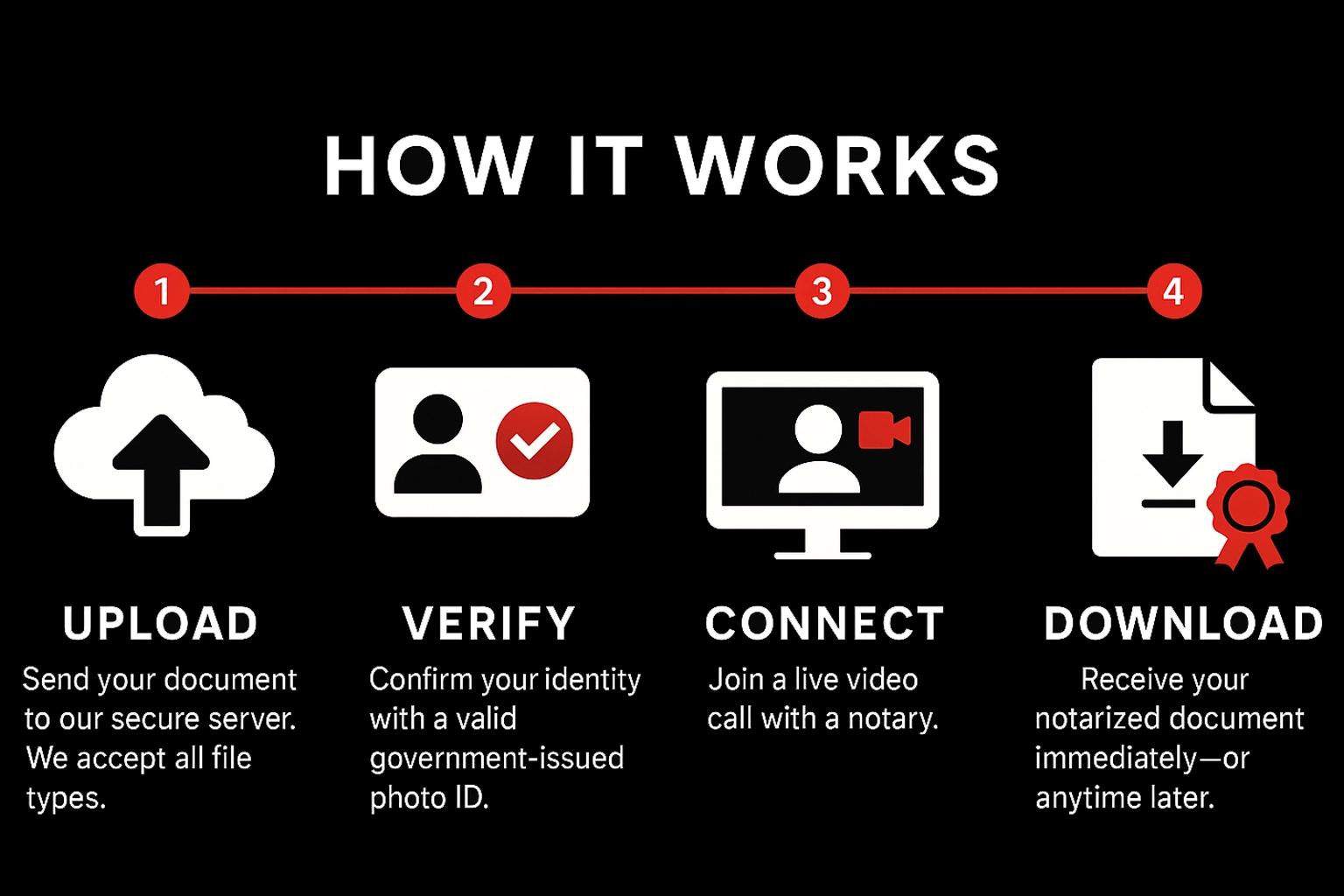
How It Works

Upload

Send your document to our secure server. We accept all file types.

Verify

Confirm your identity with a valid government‑issued photo ID.

Connect

Join a live video call with a notary.

Download

Receive your notarized document immediately—or anytime later.

Pricing & Payment

Standard

$15
Per stamp • Mon–Fri before 5:00 PM EST

After‑Hours / Weekend

$20
Per stamp • Weekdays after 5:00 PM EST & all day Sat/Sun

Payment

Pay during the meeting via Credit Card, Debit Card, Zelle, Cash App, or Venmo. Notarization completes after payment is received.

What You Need

Requirements

  • Stable internet connection
  • Device with camera, microphone, and sound
  • Ability to appear on a live audio‑video call

Accepted IDs (examples)

  • U.S. state‑issued driver’s license or photo ID
  • U.S. passport (book or card)
  • Certificate of U.S. Citizenship / Naturalization
  • Foreign passport
  • Alien Registration Card (with photo)
  • Military ID

Not a complete list. Unsure? Email hello@lookingglassrunners.com.

Ready to notarize?

Have your document signed and notarized within minutes. Getting a document notarized has never been easier.

Notarize now — fast, secure & nationwide Start

Notary Services in Virginia

Professional online and mobile notary services available 24/7